Skip to content

Meet T32 Predoc Melissa Vera


Melissa Vera is a current PhD candidate at the University of Washington School of Nursing. She is a citizen of the Ts’msyen and Yaqui First Nations from British Columbia and Northern Mexico, respectively. Her research focuses on HIV prevention among adolescent girls and young women in Western Kenya at UW Department of Global Health. She also researches Indigenous health and climate change for Washington State University. Prior to becoming a PhD student, Ms. Vera practiced as a registered nurse for four years in the hospital and clinic settings, while also working as a medical editor and writer. Her first bachelor’s degree is in Creative Writing from Seattle University and her BSN she earned from Boise State University (her hometown). In her free time, she enjoys kung fu, yoga, baking, and hiking among the moss and cedars.

Nursing & UW

Why did you decide to receive a doctoral degree in nursing?

I wanted to go into nursing because I wanted to care for patients and nurses have the most hands-on interaction. I loved seeing the difference I could make in a patient’s experience with healthcare.

What brought you to the Pacific Northwest?

I wanted to go to the best nursing school in the country and I had lived in Seattle before, a place I love to call home.

Research

What is the primary topic for research?

HIV Prevention Among Adolescent Girls and Young Women in Western Kenya

How did you become interested in this topic?

I’m interested in health questions that look at user experience for patients receiving care in healthcare settings. It’s a complex issue and can incorporate many facets of life.

Personal

What do you like to do outside of work & studies?

Kung fu, yoga, baking, hiking

What’s next for you?

After graduation, I will become research faculty at Washington State University and further pursue my research in Indigenous health and climate change.
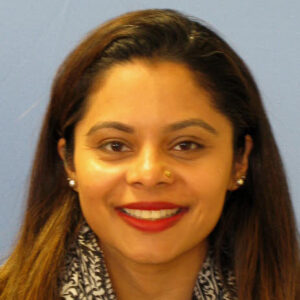
Meet T32 Predoc Deepa Oja

Deepa Oja is from Ithaca, New York and has a bachelor’s degree in Biology from Hobart and William Smith colleges in Geneva, New York. She completed her ABSN (2014) and MSN (2017) degrees from Johns Hopkins University and completed my Nurse Practitioner residency from Highland Family Medicine at the University of Rochester Medical Center.  Since then, Deepa has worked as a nurse practitioner at Cornell University, addressing the primary care needs of the older adolescent and young adult population.

Nursing & UW

Why did you decide to receive a doctoral degree in nursing?

University of Washington’s strong global health programs, it’s world-renowned faculty members who are committed to improving health locally and globally, and its rigorous Nursing science curriculum were the reasons why I chose to come to the University of Washington.

What brought you to the Pacific Northwest?

I came to Pacific Northwest to attend the Ph.D. program at the University of Washington.

Research

What is the primary topic for research?

My research topic is Individual and systems-level factors contributing to non-suppressed viral load among adolescents living with HIV in Kenya.

How did you become interested in this topic?
I have always been interested in working to optimize the health and well-being of adolescents clinically or through research. With regards to HIV, adolescents and young adults make up the growing population of all new HIV infections and have poorer outcomes compared to the adult and pediatric populations. After coming to UW, I was fortunate to join Dr. Pamela Kohler’s research study looking at the return of and action on adolescent HIV viral load results in Kenya. While doing this research, I became interested in assessing individual and systems-level facilitators and barriers to viral suppression in order to develop targeted interventions to achieve and maintain viral suppression and optimize wellness for this population.

Personal

What’s your favorite part of living in the Pacific Northwest? (Alternatively, what do you like to do outside of work & studies?)

I like to travel and hike.

Student Spotlight – Michelle Shin

Michelle Shin in the Ayni Wasi office with Ollantaytambo's dog, Jack

Name: Michelle Shin
Hometown: Los Angeles
Degrees: MSN, MPH, PhD-c
Department: School of Nursing
Research/Areas of Interest: Cervical cancer prevention


How did you get here? Why nursing?

I studied international development studies at UCLA, which was then a new major that combined foundational classes in history, anthropology, economics, and sociology. I was interested in global health, and also needed a practical way of obtaining U.S. residency to stay near my family. This led me to obtain a Master of Science in Nursing from University of Virginia in clinical nurse leadership.

What drew you to the research you do?

I felt compelled to learn more about cervical cancer because it is such a blatant manifestation of health inequality. The fact that so many women who are the pillars of our society and families, most of them in low-resource settings both in the U.S. and the world, die everyday from this very preventable disease, resonated with me personally as a first generation immigrant, woman, and a mom, and professionally as a nurse working in marginalized communities.

What is one unforgettable experience you have had that impacted your career trajectory (nursing or otherwise)?

One time while I was working as a community coordinator in Sacred Valley Health in the Peruvian Andes, I stood up all night outside the Cusco hospital with an indigenous man who had a chronic, un-healing leg wound from flesh eating bacteria, only to be turned around with the same antibiotics that he could buy in his village 5 hours away, This experience made me want to study how to make systems work better in real lives of the people.


What projects are you working on right now? Or what’s next?

I will start a postdoc position at USC where I will be working for Dr. Jennifer Tsui focusing on increasing HPV vaccine uptake in federally qualified health centers in the LA and New Jersey area. I hope to continue working in global health in some capacity and gain more experience and expertise in implementation science, mixed methods, cancer care delivery and health equity.

If you could be anything else, besides a nurse, what would it be?

I think I would have liked to become a journalist. I love listening to people’s stories, and telling their stories to others.

Letter from the Directors

Dear UW Nursing Students & Faculty,

Picture of Healthcare Workers March

Thank you all for a memorable academic year. This year took many unexpected turns. The COVID19 pandemic  has highlighted our resilience as a school and community. It has also demonstrated the stark inequities in our community, in our region and country, as well as around the world, specifically for Black, Indigenous, and People of Color (BIPOC). Much work needs to be done to ensure we all continue to grow in our learning, as nurses, as supporters of nurses and as individuals and communities, and that we change our status quo which is so unfair to so many, and build a more just society for all. Now more than ever, our role as advocates for nursing in global health is crucial. Nurses are working on the frontline of the COVID19 response in every country, within hospitals and in communities. We are in a unique position to bridge the gap between the community and health care services, and promote solidarity amongst all health disciplines who work towards equity in life and health.

While summer study abroad experiences are currently on hold for now, there are a number of ways to engage this summer in the greater Seattle area, both with Seattle King County Public Health and other local agencies. Many of these opportunities are remote while others require some in-person interaction.

For BSN and ABSN students who do not yet hold a RN license please consider registering with Community Health Volunteers a site which helps link public health agencies with customer care/service, data gathering and entry and analysis, language skills, and much more. Volunteer assignments may vary in scope, location, time and length of commitment. Again, current healthcare license or medical background is not required to volunteer. Email doh-volunteer@doh.wa.gov for more information or visit the Washington State Emergency Registry of Volunteers (WaServ) website to register and indicate your interest.

For licensed providers please see the following link for COVID19 specific opportunities.

For students, while you are planning your activities for the upcoming 2020-21 academic year, keep in mind that there are a variety of ways you can become involved in the greater UW global health community. The UW offers a variety of graduate certificate programs that actively encourage nurses through the Department of Global Health and the Population Health Initiative. In Winter 2021, the Global Health Nursing course (NURS581), which examines critical global health issues through an applied healthcare lens, will be offered again.  The CGHN will continue to organize Brown Bag Seminars that highlight research and projects happening by nurses (including faculty, students and nurse leaders in the community). The best way to stay connected with CGHN opportunities are to sign up for our listserv.

The Center for Global Health Nursing will be available all summer to help you with realizing your goals in global health. Please feel free to contact us at cghn@uw.edu.

Sincerely,

Pamela Kohler & Sarah Gimbel

Center for Global Health Nursing Directors Pam Kohler & Sarah Gimbel


Exploration Seminar: La Dolce Vita – Comparative Food Systems in Italy

Application Deadline: January 31, 2020
Dates: 6/25 – 7/23/2020

La Dolce Vita: Comparative Food Systems in Italy is a 4-week intensive program exploring sustainable food systems in Italy using systems thinking and a variety of perspectives to understand how factors, such as culture, policy, diet, and market structure, interact to create environmental, economic, health, and social/equity outcomes. The program begins with farmstays in Tuscany, including a coastal, organic farm. Here we will learn about sustainable agriculture and will taste and cook foods. Local speakers will discuss the role of Italian food culture, and contrast production methods and policies in the E.U. and the U.S. Next, students will move to the UW Rome Center to explore the intricate history and patchwork of political, social, cultural, economic, and health drivers that have shaped food systems in Italy, particularly around regional foods. We will survey a variety of retail outlets, will shop for food and prepare meals, setting the stage for a discussion on how dietary choices influence human and planetary health. In Rome, students will meet with civic food networks (e.g., Slow Food Movement), and international food agencies focused on sustainability and food security. Finally, we will travel to the Emilia-Romagna region to tour and reflect on three important Italian products (i.e., balsamic vinegar, parmigiano reggiano, and prosciutto) and to learn about Italy’s mature and growing cooperative economy. Throughout will be a discussion on how to evaluate the evidence to make responsible personal and political choices, and comparisons and reflections of food systems between the U.S. and Italy.

Learn more here.

Global Month 2019

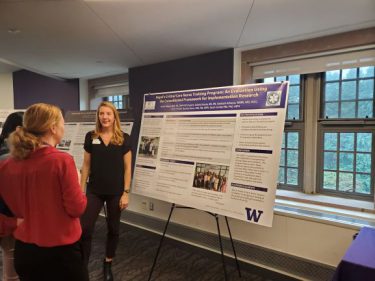
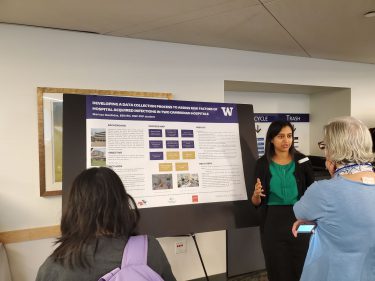
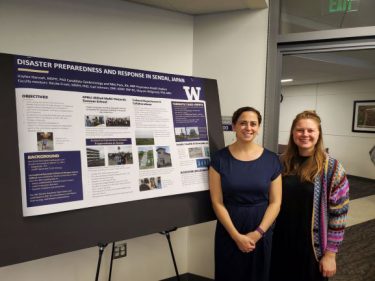
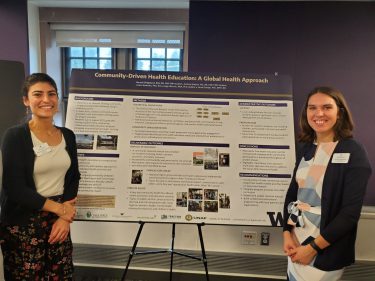
On November 14th, multiple departments came together to hear Sheila Davis speak about the growth of Partners in Health over the past 30 years. The event started with poster presentations from students engaged in global health projects over the past year. Andrea Shelton (DNP-Midwifery), Hannah Bridgeland (DNP-FNP), Nicole Bayard (DNP-FNP), Marissa Masihdas (DNP-FNP), Rikki Peck (DNP-FNP), and Haylea Hannah (PHD Candidate – Public Health) all presented about their work in Peru, Nepal, Cambodia and Japan.

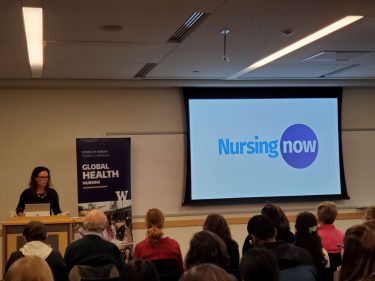
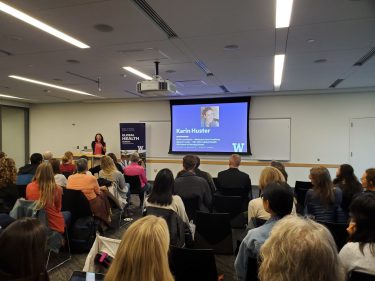
Sarah Gimbel, Co-Director of the Center for Global Health Nursing had a chance to introduce the School of Nursing and its commitment to the year of the nurse and midwife as presented by Nursing Now. She was pleased to welcome Karin Huster, an alumnus of the UW School of Nursing, who now works for Médecins sans Frontiers as a site coordinator and has worked closely with our keynote speaker, Sheila Davis.

Sheila Davis, CEO of Partners in Health, took the stage to discuss Partners in Health after 30 years and how the role of the nurse is important in the organization’s mission and in the overarching goal of global health equity. Sheila took the audience on a trip through her nursing career which has led her to become the CEO, how the organization is embracing her perspective as a nurse and the steps nurses must take in the future in order to care for the world’s most vulnerable populations.

The Center for Global Health Nursing wants to thank the UW School of Nursing, the Population Health Initiative, I-TECH, and the Department of Global Health for helping sponsor this event.

CGHN at the 2019 WIN Conference

To kick off Spring Quarter, numerous faculty and students from the University of Washington School of Nursing participated in the 2019 Western Institute of Nursing (WIN) Conference. WIN is one of four regional nursing research organizations in the US. Members of WIN include individual researchers, clinicians, educators, students, academic institutions, and health care organizations. Every year, they host researchers from their membership at their annual research conference. This year, the research conference took place on April 10-13th in San Diego, CA and the Center for Global Health Nursing is pleased to announce that three posters were presented by students active in the global health community. Congratulations!


Students, Morgan Busse, Marissa Masihdas, Jane Kim and Yvette Rodriguez in front of poster at 2019 Poster Presentation

Title:      Fostering DNP-PhD Student Collaboration: A Global Project

Authors: Yvette Rodriguez (PhD Student), Morgan Busse (DNP-FNP student), Marissa Masihdas (DNP-FNP student), Jane Kim (DNP-FNP student), Dr. Sarah Gimbel


Student, Jane Kim in front of poster presentation at the 2019 WIN Conference

Title: A learning Approach for Nurses Providing Option B+ Services in Mozambique

Authors: Jane Kim (DNP-FNP Student), Dr. Sarah Gimbel


(Not Pictured) Title:   Patient Needs and Recommendations to Refine a Tuberculosis Support App 

Authors: Yvette Rodriguez (PhD Student), Dr. Sarah Iribarren