Skip to content

Go Global! March 14th, 2025

Go Global

Date: Friday, March 14 12:30 – 2:00 p.m.
Location: Health Sciences Education Building Room 101

RSVP HERE

The University of Washington School of Nursing Center for Global Health Nursing invites you to join us March 14 at 12:30pm for our annual event.

This year’s event theme will focus on women’s health and will include a catered lunch, feature researchers and rising stars in the field of global health, and give attendees an opportunity to view poster presentations from our Global Health Nursing Certificate students and 2024 study abroad participants!

Plenary Speaker
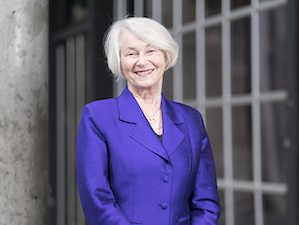
Dr. Nancy Woods, PhD, RN, FAAN
Dr. Nancy Woods, PhD, RN, FAAN, Professor and Dean Emeritus

Nancy Woods, PhD, RN, FAAN, is a renowned figure in nursing. Recognized by her research and academic leadership throughout her career, Dr. Woods was given the distinction of “Living Legend” by the American Academy of Nursing in 2017. In addition to her long research career, she was the dean of the University of Washington School of Nursing from 1998 – 2008, and was pivotal in launching, with the expertise of faculty and students at the School of Nursing, the first Doctor of Nursing Practice degree program on the West Coast.

Dr. Woods began her research focusing on young adult women’s roles and their health as they entered the labor force. She led the first prevalence study of perimenstrual symptoms in the US in the early 1980s and identified a variety of symptom patterns linking symptoms to reproductive endocrine measure, stressors and stress response biomarkers. Over the course of her research career, Dr. Woods co-established the first NIH-funded Center for Women’s Health Research and the Seattle Midlife Women’s Health Study, following over 500 women for up to 20 years.  She also was an investigator for the Women’s Health Initiative and the MsFLASH study, focusing on symptom management for hot flashes. Her work has significantly advanced the understanding of menstrual cycle symptoms, menopause, and healthy aging.

Dr. Woods served on multiple national advisory committees, including the first NIH National Advisory Committee for Women’s Health, which established the original NIH agenda for Women’s Health Research. She has also served as president of the American Academy of Nursing, the North American Menopause Society, and the Society for Menstrual Cycle Research.

Since retiring from the University of Washington in 2017, Dr. Woods continues to advocate for women’s health by volunteering her time working with the Women Living Better, an organization designed to provide women with evidence-based information about menopause. 

Guest Speaker

Karin Huster, BSN, MPH

Karin Huster, BSN, MPH

UW graduate Karin Huster earned her BSN in 2005 and her MPH from the DGH in 2013. After working for nine years as an RN at Harborview Medical Center’s Trauma ICU, she focused her work on responding to humanitarian emergencies: as a field epidemiologist or in emergency coordination roles for MSF’s (Doctors without Borders) emergency pool as well as in her health advisor function for USAID’s Bureau of Humanitarian Assistance. Her work has taken her throughout the world, to meet the needs of refugees and other marginalized populations.  A small list of her work experiences include spending 2014-2016 in West Africa during the height of the Ebola epidemic, responding to a large yellow fever outbreak response in the Democratic Republic of Congo in 2017, responding to a dangerous Ebola outbreak in the DRC in 2018, managing a MSF emergency war hospital in Iraq in 2018, volunteering with King County Public Health on their COVID response in the homeless population and spending 5 months in Gaza in 2024. She is tireless. She currently serves as a Medical Coordinator for MSF in Gaza. She disseminates the injustices she witnesses in her work through Op-eds in the New York Times,  via video blogs on YouTube and social media. In 2024 she was awarded the distinguished Alumna Award from the UWSON.
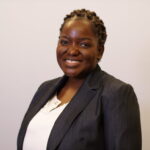
Faculty Spotlight: Dr. Kaboni Whitney Gondwe


Hometown: Malawi

Degrees: PhD in Nursing (2018), Doctoral Certificate in Global Health (2018), Master of Science in Nursing Education and Nursing Administration (2012), Certificate in Midwifery (2009), Bachelor of Science in Nursing (2007), Certificate in Global Health Nursing (2006)

Department: Child, Family, and Population Health Nursing

Research/Areas of Interest: Health equity, health disparities in maternal and infant outcomes, parent-child relationship, stress and perinatal inflammation, global health


Why did you choose nursing?

I wanted to be a nurse since I was young. I wrote an essay of wanting to be a nurse in 5th grade and in that essay I mentioned how I admired my aunt who was a nurse and nurses who took care of me when I had malaria while young. The white uniforms and nurses cap and their encouraging words and smiles made my younger self think nurses were angels who make you feel better. I would later lose my mother at 12 and this made want to save lives so other people get to spend more time with their loved ones. I later decided to pursue midwifery because I love working with babies and being in a space where I helped people with their reproductive goals and childbirth safely gives me joy.

What drew you to global health?

I am originally from Malawi, where health inequities and disparities exist especially in low-income settings. In the US, I also noted that social determinants of health continue to drive racial disparities in maternal and infant outcomes. My work seeks to improve the outcomes on vulnerable populations through interventions that are tailored for minority populations and address the barriers to accessing quality care and health promotion.

What is one unforgettable experience you have had that impacted your career trajectory (nursing or otherwise)?

One unforgettable experience in my life was when I was a nursing student. I was in a medical surgical unit where there was a patient who was critically ill and people were uncertain if they would survive. Resources were limited, the patient also had lost hope that they would survive, and they were alone because this was a referral facility far from their home. I thought to myself, even if they won’t survive at least, they should know people cared.  I discussed with my clinical instructor I requested that I be assigned that patient. The patient was poor and had no food and couldn’t get food for themselves. Food was not delivered at the bedside due to limited staffing, as such caregivers in Malawi assist with this or bring food from home. The Patient had no caregivers present. We worked tirelessly for 6 weeks, making sure the patient was eating and receiving quality care including emotional support. The patient greatly improved and regained their will to live. I still remember the smile on their face when they said to me “Thank you for not giving up on me, if it wasn’t for you, I would have died”. Their family members had finally found money for transportation to come and help and we all almost cried as they thanked me for just being there just to talk to the patient sometimes. The patient recovered and was eventually discharged. It is these experiences that drive my passion to be a nurse and later a midwife. This is why I value health as a whole (physical, mental, social, spiritual, and more) and the importance of being truly present for people who need us.

What projects are you working on right now?

Currently I am working on a study examining the relationship between social determinants of health and prenatal inflammation in Black women and exploring barriers and facilitators to access for perinatal services among Black women in the US.

What excites you about being part of the faculty at the School of Nursing?  

I am excited to be part of a team that strives to promote health equity and being among people who are passionate about making a difference locally and globally.

If you could be anything else (besides faculty at the SON of course), what would it be?

I would probably be a missionary nurse-midwife volunteering around the world or babysitting.

Letter from the Directors

Dear UW Nursing Students & Faculty,

Picture of Healthcare Workers March

Thank you all for a memorable academic year. This year took many unexpected turns. The COVID19 pandemic  has highlighted our resilience as a school and community. It has also demonstrated the stark inequities in our community, in our region and country, as well as around the world, specifically for Black, Indigenous, and People of Color (BIPOC). Much work needs to be done to ensure we all continue to grow in our learning, as nurses, as supporters of nurses and as individuals and communities, and that we change our status quo which is so unfair to so many, and build a more just society for all. Now more than ever, our role as advocates for nursing in global health is crucial. Nurses are working on the frontline of the COVID19 response in every country, within hospitals and in communities. We are in a unique position to bridge the gap between the community and health care services, and promote solidarity amongst all health disciplines who work towards equity in life and health.

While summer study abroad experiences are currently on hold for now, there are a number of ways to engage this summer in the greater Seattle area, both with Seattle King County Public Health and other local agencies. Many of these opportunities are remote while others require some in-person interaction.

For BSN and ABSN students who do not yet hold a RN license please consider registering with Community Health Volunteers a site which helps link public health agencies with customer care/service, data gathering and entry and analysis, language skills, and much more. Volunteer assignments may vary in scope, location, time and length of commitment. Again, current healthcare license or medical background is not required to volunteer. Email doh-volunteer@doh.wa.gov for more information or visit the Washington State Emergency Registry of Volunteers (WaServ) website to register and indicate your interest.

For licensed providers please see the following link for COVID19 specific opportunities.

For students, while you are planning your activities for the upcoming 2020-21 academic year, keep in mind that there are a variety of ways you can become involved in the greater UW global health community. The UW offers a variety of graduate certificate programs that actively encourage nurses through the Department of Global Health and the Population Health Initiative. In Winter 2021, the Global Health Nursing course (NURS581), which examines critical global health issues through an applied healthcare lens, will be offered again.  The CGHN will continue to organize Brown Bag Seminars that highlight research and projects happening by nurses (including faculty, students and nurse leaders in the community). The best way to stay connected with CGHN opportunities are to sign up for our listserv.

The Center for Global Health Nursing will be available all summer to help you with realizing your goals in global health. Please feel free to contact us at cghn@uw.edu.

Sincerely,

Pamela Kohler & Sarah Gimbel

Center for Global Health Nursing Directors Pam Kohler & Sarah Gimbel


Week One with the 2019 Peru Scholars


Hannah Bridgeland and Andrea Shelton arriving in Iquitos, Peru

Andrea Shelton and I arrived in Iquitos, Peru on July 1 eager to meet the Claverito community members and get to work on our projects. The weather is not nearly as hot and sticky as we expected, so we are both quite relieved about that surprise! During this first week we got a taste of Amazon weather with mostly warm, sunny days broken up by brief, unexpected showers. This weekend we experienced Amazon rainstorms along with the street flooding and loss of internet and slippery sidewalks that comes with the large amounts of water. So far, we have only got caught in the rain once, so we are surviving the unpredictable weather of the Amazon well!

Andrea Shelton with Lorenzo the Parrot

We have a beautiful apartment situated on the Malecón Tarapaca, which is a large walkway filled with shops, restaurants and museums right next to the Amazon. We are a short walking distance to markets, grocery stores, gyms, the program’s office and almost anything else we could want. Andrea made friends with this talkative parrot named Lorenzo in the Mercado Central. He is very proficient in saying, “Hola!” but “Ciao” seems like a challenge.

Hannah Bridgeland in front of the Program Office

The food is wonderful and trying different Peruvian dishes is one of our favorite hobbies! Our first night in Iquitos was celebrated at a restaurant on the Malecón with a variety of different dishes. Andrea is a fan of alligator meat while my jaw gets tired from chewing the tough meat! We both agree the ceviche, especially the sauce put on ceviche, is amazing, and we could get used to the consistent supply of fresh pineapple, papaya, oranges, and granadilla.

Besides getting settled into life in Iquitos we have been busy this week learning about the InterACTION Labs projects, the Claverito community and the specific needs of this part of Peru. Together with a first-year medical student, we created a presentation for the other members of the InterACTION Labs team highlighting our research findings on the most prevalent health and environmental issues in Iquitos. The most prevalent health issues facing the Claverito community, which is a floating, migrant community, are different from the rest of the city. From our previously collected data we have identified high rates of teenage pregnancy, tuberculosis, parasitic infections, vector-borne diseases (Malaria, Dengue, Zika), and malnutrition. As expected, our research demonstrated that many of the most prevalent health conditions in Iquitos are modifiable and many are directly related to the environmental issues of the area.

InterAction Labs team sharing a meal in Peru
One entrance to Claverito
Entrance to Claverito

We have three main activities planned. First, we expect to continue the parenting intervention (Academia Familiar del Amazonas (AFA)) started by the DNP students last summer.  This will include development and implementation of 8-week training modules, one for adolescent girls and another for women in the community. Previously identified topics of interest include reproductive health, management of respiratory illness, management of infectious disease, etc. We are meeting with community members this week to finalize their main interests, so we can best meet their expectations. We also plan to support the establishment and functioning of the floating library. The idea to build the library emanated from AFA activities last summer and the funds to support it were mobilized by last year’s DNP cohort. We are so pleased to be working with three UW landscape architecture students as well as the community in the design the library. Finally we are working with School of Nursing faculty and students to further cement collaboration across our institutions.

During our free-time this week, we enjoyed watching Peru’s team compete in the semi-finals and finals of the Copa de Americas tournament. We learned how excited Peruvians are about fútbol and experienced Peruvian spirit firsthand. We also had a potluck for the US women’s world cup championship. We like to think they heard our cheering all the way from Peru!


Until next time!
Hannah Bridgeland