Skip to content

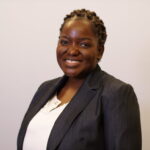
Faculty Spotlight: Dr. Kaboni Whitney Gondwe


Hometown: Malawi

Degrees: PhD in Nursing (2018), Doctoral Certificate in Global Health (2018), Master of Science in Nursing Education and Nursing Administration (2012), Certificate in Midwifery (2009), Bachelor of Science in Nursing (2007), Certificate in Global Health Nursing (2006)

Department: Child, Family, and Population Health Nursing

Research/Areas of Interest: Health equity, health disparities in maternal and infant outcomes, parent-child relationship, stress and perinatal inflammation, global health


Why did you choose nursing?

I wanted to be a nurse since I was young. I wrote an essay of wanting to be a nurse in 5th grade and in that essay I mentioned how I admired my aunt who was a nurse and nurses who took care of me when I had malaria while young. The white uniforms and nurses cap and their encouraging words and smiles made my younger self think nurses were angels who make you feel better. I would later lose my mother at 12 and this made want to save lives so other people get to spend more time with their loved ones. I later decided to pursue midwifery because I love working with babies and being in a space where I helped people with their reproductive goals and childbirth safely gives me joy.

What drew you to global health?

I am originally from Malawi, where health inequities and disparities exist especially in low-income settings. In the US, I also noted that social determinants of health continue to drive racial disparities in maternal and infant outcomes. My work seeks to improve the outcomes on vulnerable populations through interventions that are tailored for minority populations and address the barriers to accessing quality care and health promotion.

What is one unforgettable experience you have had that impacted your career trajectory (nursing or otherwise)?

One unforgettable experience in my life was when I was a nursing student. I was in a medical surgical unit where there was a patient who was critically ill and people were uncertain if they would survive. Resources were limited, the patient also had lost hope that they would survive, and they were alone because this was a referral facility far from their home. I thought to myself, even if they won’t survive at least, they should know people cared.  I discussed with my clinical instructor I requested that I be assigned that patient. The patient was poor and had no food and couldn’t get food for themselves. Food was not delivered at the bedside due to limited staffing, as such caregivers in Malawi assist with this or bring food from home. The Patient had no caregivers present. We worked tirelessly for 6 weeks, making sure the patient was eating and receiving quality care including emotional support. The patient greatly improved and regained their will to live. I still remember the smile on their face when they said to me “Thank you for not giving up on me, if it wasn’t for you, I would have died”. Their family members had finally found money for transportation to come and help and we all almost cried as they thanked me for just being there just to talk to the patient sometimes. The patient recovered and was eventually discharged. It is these experiences that drive my passion to be a nurse and later a midwife. This is why I value health as a whole (physical, mental, social, spiritual, and more) and the importance of being truly present for people who need us.

What projects are you working on right now?

Currently I am working on a study examining the relationship between social determinants of health and prenatal inflammation in Black women and exploring barriers and facilitators to access for perinatal services among Black women in the US.

What excites you about being part of the faculty at the School of Nursing?  

I am excited to be part of a team that strives to promote health equity and being among people who are passionate about making a difference locally and globally.

If you could be anything else (besides faculty at the SON of course), what would it be?

I would probably be a missionary nurse-midwife volunteering around the world or babysitting.
Meet our T32 pre-doctoral trainees

The RiNGH training program, funded by the National Institute for Nursing Research (T32 NR019761) and coordinated by the CGHN and the Office of Diversity, Equity and Inclusion, prepares nurse scientists with knowledge and skills to advance global health equity through team-based, interdisciplinary research. This training grant offers pre-doctoral and post-doctoral fellowships of up to 2 years to support education, scholarly mentorship, and career development.

Starting Spring Quarter, three pre-doctoral trainees began study as the first cohort.

Meet our pre-docs


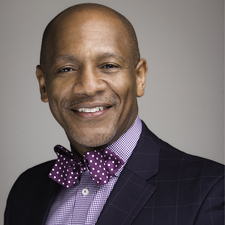
Meet T32 Predoc Rodney Perkins

Before post-graduate work, Rodney led the Preexposure Prophylaxis (PrEP) for Her initiative at Mary’s Center in Washington, DC. PrEP for Her is a DC collaboration between the DC Department of Health and Washington AIDS Partnership (WAP), the first city-wide program exclusively for women of color. Before taking the position at Mary’s Center, he was the director of the Whitman-Walker Health Gay Men’s Health and Wellness Clinic (GMHWC), the largest provider of HIV/STI testing, counseling, and treatment services in the nation’s capital. Rodney also held a faculty post in the College of Nursing and Allied Health at Howard University, teaching adult and maternal-infant health nursing.

He has a bachelor’s and master’s degree in nursing from the University of Maryland School of Nursing in Baltimore, MD. He also has a Master’s of Public Health degree in Epidemiology from the George Washington University School of Public Health. He is a member of Sigma Theta Tau International Honor Society, Psi at-Large Chapter, and the Association of Nurses in AIDS Care, Puget Sound Chapter.

Nursing & UW

Why did you decide to receive a doctoral degree in nursing?

I chose to receive a doctoral degree in nursing science to prepare me for independent research and investigation of novel questions driven by my own scientific inquiry and through my nursing perspective. Nurse researchers are underrepresented, especially Black males in HIV/STI research. My professional HIV/STI experience and my training as a nurse-scientist will allow me to make unique and meaningful contributions to the field.

What brought you to the Pacific Northwest?

As part of my research to support the PrEP for Her initiative, I discovered an article in the New England Journal of Medicine about the dapivirine vaginal ring to prevent HIV. I was familiar with Jared Baeten’s work on PrEP and the University of Washington. I had contemplated attending the UW Principles of STI/HIV Research course, and this article inspired me and sparked interest in PrEP use among sexual gender minorities. My decision to pursue doctoral studies at UW came through email correspondence with Dr. Sara Gimbel in the School of Nursing, who arranged meetings with Drs. Baeten, Dombrowski, and Steckler –the “PrEP rock stars,” she called them. I met my current mentor, Dr. Connie Celum, MD, MPH, through these networks.

Research

What is the primary topic for research?

My primary research topic is to understand how pleasure influences doxyPEP use and perceived risk of HIV and STIs among Black, Latinx, and Multiracial (BLM) men who use ARTs for treatment or prevention and how health provider beliefs and attitudes influence doxyPEP prescription practices, accessibility, and uptake.

How did you become interested in this topic? 

My research interests stem from my work to adequately serve the sexual gender minority (SGM) population, given that SGMs are disproportionately affected by HIV and STIs. Biomedical HIV prevention through PrEP and treatment as prevention (TasP) are effective and almost eliminate HIV transmission; however, the uptake among BLM men remains low. My hypothesis for the low uptake is associated with PrEP/TasP implementation strategies targeting Black and Latinx men that were not sensitive to meeting their individualized needs. I would like to understand the experiences of BLM men who use PrEP/TasP to better inform the implementation of biomedical STI prevention tools, such as doxyPEP, with PrEP/TasP to improve uptake among BLM men.

Personal

What’s your favorite part of living in the Pacific Northwest? (Alternatively, what do you like to do outside of work & studies?)

My favorite part of living in the Pacific Northwest is the landscape, and I enjoy being surrounded by mountains and water. I also enjoy live theater, all genres of music, cycling, and traveling. To date, I have visited over 30 countries. After graduation, I plan to move to Asia to explore different Asian cultures for the summer. I am interested in learning about other cultures with a particular interest in health and the healing experience. Asia is one of two continents that I have yet to explore.

What’s next for you?

After completing my Ph.D., I would like to transition into an academic research position where I can combine clinical practice and research as part of an interdisciplinary team. As an academic faculty member, I would like to train and mentor the next generation of nurse researchers, more specifically, males and people of color, to continue contributing to rigorous research produced by nurses.

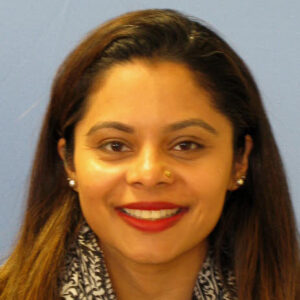
Student Spotlight – Michelle Shin

Michelle Shin in the Ayni Wasi office with Ollantaytambo's dog, Jack

Name: Michelle Shin
Hometown: Los Angeles
Degrees: MSN, MPH, PhD-c
Department: School of Nursing
Research/Areas of Interest: Cervical cancer prevention


How did you get here? Why nursing?

I studied international development studies at UCLA, which was then a new major that combined foundational classes in history, anthropology, economics, and sociology. I was interested in global health, and also needed a practical way of obtaining U.S. residency to stay near my family. This led me to obtain a Master of Science in Nursing from University of Virginia in clinical nurse leadership.

What drew you to the research you do?

I felt compelled to learn more about cervical cancer because it is such a blatant manifestation of health inequality. The fact that so many women who are the pillars of our society and families, most of them in low-resource settings both in the U.S. and the world, die everyday from this very preventable disease, resonated with me personally as a first generation immigrant, woman, and a mom, and professionally as a nurse working in marginalized communities.

What is one unforgettable experience you have had that impacted your career trajectory (nursing or otherwise)?

One time while I was working as a community coordinator in Sacred Valley Health in the Peruvian Andes, I stood up all night outside the Cusco hospital with an indigenous man who had a chronic, un-healing leg wound from flesh eating bacteria, only to be turned around with the same antibiotics that he could buy in his village 5 hours away, This experience made me want to study how to make systems work better in real lives of the people.


What projects are you working on right now? Or what’s next?

I will start a postdoc position at USC where I will be working for Dr. Jennifer Tsui focusing on increasing HPV vaccine uptake in federally qualified health centers in the LA and New Jersey area. I hope to continue working in global health in some capacity and gain more experience and expertise in implementation science, mixed methods, cancer care delivery and health equity.

If you could be anything else, besides a nurse, what would it be?

I think I would have liked to become a journalist. I love listening to people’s stories, and telling their stories to others.